Cleaning kitchen cabinets is not complicated, even though the internet can make it feel that way.
Search for “how to clean high-gloss cabinets” and you’ll get one answer. Search “how to clean matte cabinets” and you’ll get another. Textured cabinets? A third.
For Lioher’s three finishes (LUXE high-gloss, ZENIT super matte and SYNCRON textured), the answer is, luckily, simpler than that.
This one cleaning method works for all three finishes
Our recommended cleaning routine is the same for LUXE, ZENIT and SYNCRON:
- Use a soft, non-abrasive cloth. Microfiber is ideal.
- Dampen it with warm water and, optionally, a small amount of mild dish soap.
- Wipe the cabinet surface.
- Dry immediately with a clean, dry cloth.
That’s the whole method. Every finish. Every day.
What changes between finishes isn’t the technique, it’s what you’re preventing and how each surface behaves under daily use.
Cleaning high-gloss cabinets (LUXE)

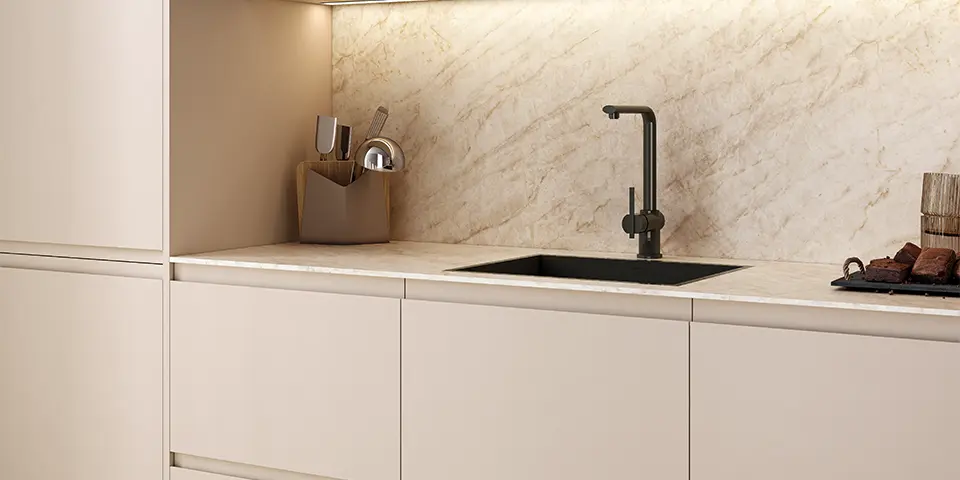
LUXE is Lioher’s high-gloss lacquered surface. It has the highest scratch resistance of our three principal finish technologies and a mirror effect that shows every detail, including fingerprints, dust and water spots.
That visibility is the entire story of caring for high-gloss cabinets. Nothing about gloss makes it hard to clean. It just shows what other finishes hide.
What this means day to day:
- Wipe more often, not harder. A quick pass with a soft, damp cloth once a day near cooking zones keeps LUXE looking fresh. Waiting until you see marks means you’re cleaning dried-on residue instead of fresh smudges.
- Always dry after wiping. Water spots are the most common complaint on gloss surfaces, and they’re the easiest to prevent. A dry cloth pass after cleaning removes them before they set.
- Skip anything abrasive. No scouring pads, no melamine “magic” erasers, no baking soda paste. LUXE’s mirror finish scratches under abrasives, and once it does, the marks catch every light source.
Cleaning matte cabinets (ZENIT)

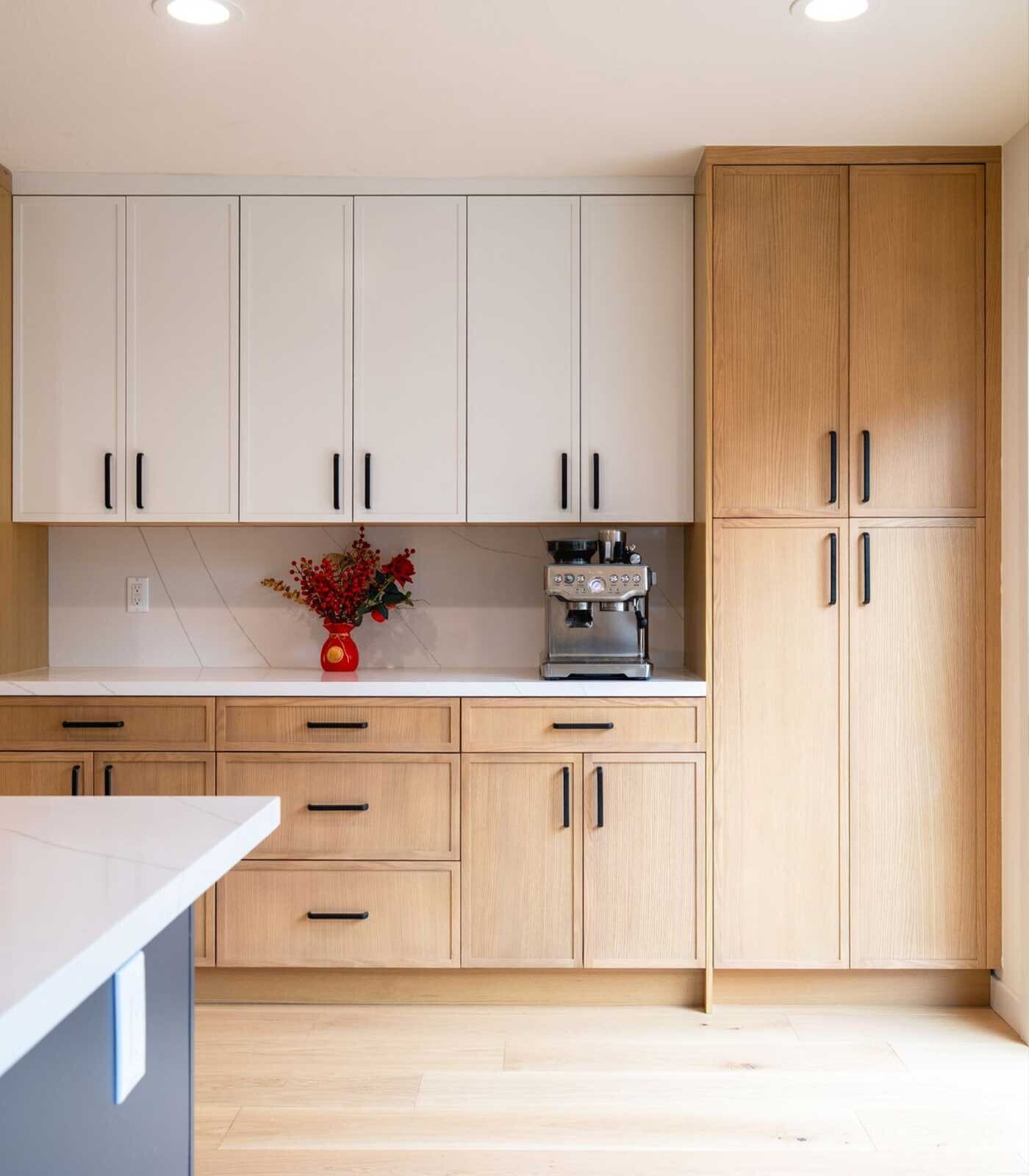
ZENIT is Lioher’s super matte, anti-fingerprint lacquered surface. Smudges and prints simply don’t show the way they do on gloss. The surface has a silky, low-reflection quality, and it’s designed to hide the marks that make gloss high-maintenance.
That doesn’t mean matte cabinets never need cleaning. But it does mean you have more room between wipes.
What this means day to day:
- Same soft cloth, same mild soap. The anti-fingerprint treatment doesn’t need special cleaners. Standard soap and water works.
- Watch for greasy fingerprints near the range. “Anti-fingerprint” hides prints from clean hands. Cooking oil is a different story. Wipe grease off promptly, before it sets.
- No streaks with matte. Because ZENIT doesn’t reflect light the way gloss does, you won’t chase streaks around trying to buff them out. Wipe, dry, done.
Cleaning textured cabinets (SYNCRON)
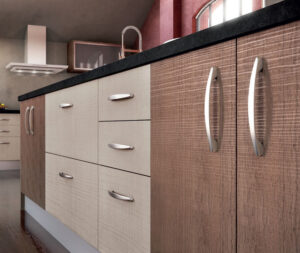
SYNCRON is Lioher’s textured surface, made from particle board that’s at least 70% recycled material and finished to feel like natural wood and other materials. The texture hides fingerprints and everyday smudges the way matte does. But it also creates fine grooves that can hold onto dust and cooking residue over time.
SYNCRON has the lowest scratch and abrasion resistance of the three finishes, so the case for a gentle hand is strongest here.
What this means day to day:
- Wipe with the grain. Following the direction of the texture, rather than scrubbing across it, lifts residue out of the grooves instead of pushing it deeper.
- Don’t scrub. A soft cloth is enough. Stiff brushes and abrasive pads will wear the texture down and dull the finish in the spots you scrub most.
- For stuck-on residue near the range, let a warm, soapy cloth sit on the spot for a minute to loosen it, then wipe gently. Patience beats pressure.
What to never use on any Lioher finish
- Solvents. Acetone, paint thinner, mineral spirits and similar.
- Alcohol-based cleaners. This includes many “disinfecting” sprays and wipes. Check the label.
- Ammonia-based cleaners. Glass cleaners like Windex are the most common offender in a kitchen.
- Abrasive pads, powders and pastes. No scouring pads, no baking-soda scrubs, no melamine sponges.
Aggressive chemicals dull the lacquer and can leave permanent marks. Abrasives scratch the surface. Both problems show up first and worst on high-gloss, but neither is good for any of the three finishes.
New cabinets: the 6-month protective film rule
If your LUXE or ZENIT cabinets arrived with a peel-off protective film on the doors and panels, remove it once installation is complete, and no later than 6 months after delivery. Left on longer, the adhesive can leave residue on the surface.
After removing the film, wait 24 hours before cleaning. That gives any remaining adhesive time to fully release.
SYNCRON cabinets don’t ship with the same protective film, so this rule doesn’t apply to textured finishes.
Frequently asked questions
Can I use Windex on my kitchen cabinets?
No. Windex contains ammonia, which Alvic lists as one of the chemicals to avoid on LUXE, ZENIT and SYNCRON. Use mild dish soap and warm water instead.
Can I use disinfecting wipes on cabinet doors?
Check the label first. Many disinfecting wipes contain alcohol, which we recommend avoiding on all three finishes. If the wipe is alcohol-free and non-abrasive, it’s generally safe for a quick pass, but follow with a damp cloth and dry.
Do matte cabinets show fingerprints?
ZENIT is our super matte finish and is marketed as anti-fingerprint. In daily use, prints from clean hands don’t show the way they do on high-gloss. Greasy or oily fingerprints from cooking still need to be wiped away.
How often should I clean my kitchen cabinets?
Wipe visible marks as they happen, especially near the range and sink. A full wipe-down of all doors once a week keeps any finish looking new. High-gloss (LUXE) rewards more frequent light cleaning; matte (ZENIT) and textured (SYNCRON) can go longer between wipes.
How do I get grease off cabinet doors?
Warm water and mild dish soap on a soft cloth. Let it sit on the greasy spot for a minute if needed, then wipe. Dry immediately. Skip degreaser sprays; most contain solvents or ammonia.
Can I use a Magic Eraser on my cabinets?
No. Melamine foam erasers are abrasive at the microscopic level. They’ll dull the finish, and on LUXE specifically, they can leave visible scratches in the gloss.
Not sure which finish is on your cabinets? Our guide to Lioher’s three finishes walks you through the difference between high-gloss, matte and textured, and how to choose the right one for your kitchen.